
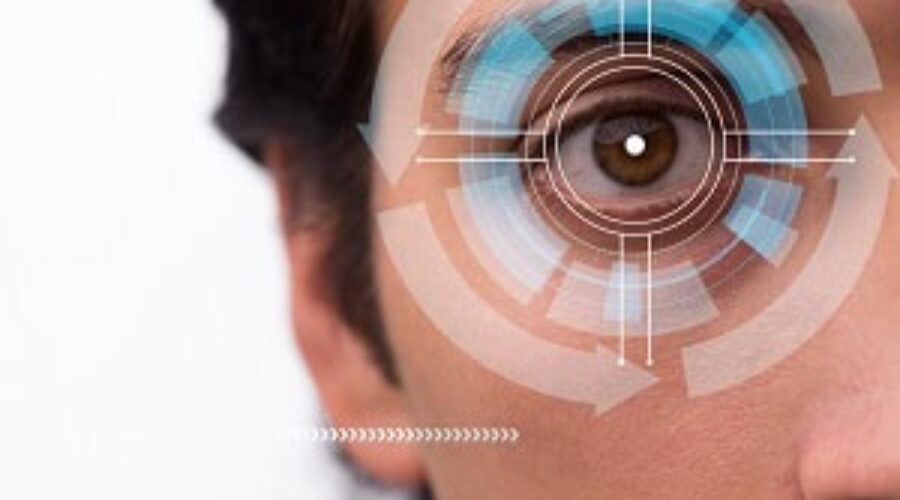
What is Iridology?
Iridology, also known as iridodiagnosis or iridiagnosis is an alternative medicine technique to determine information about a patient’s health by viewing the eyes. Some of the proponents of this technique, claim that patterns, colors, and other characteristics of the iris can be examined to determine information about a patient’s systemic health. Practitioners match their observations to iris charts, which divide the iris into zones that correspond to specific parts of the human body. Iridologists see the eyes as “windows” into the body’s state of health.
Iridologists claim they can use the charts to distinguish between healthy systems and organs in the body and those that are overactive, inflamed, or distressed. Iridologists claim this information demonstrates a patient’s susceptibility towards certain illnesses, reflects past medical problems, or predicts later health problems. As opposed to evidence-based medicine, iridology is not supported by quality research studies. The features of the iris are one of the most stable features on the human body throughout life. The stability of iris structures is the foundation of the biometric technology which uses iris recognition for identification purposes. The iris is the greenish-yellow area surrounding the transparent pupil (showing as black). The white outer area is the sclera, the central transparent part of which is the cornea.
Iridologists generally use equipment such as a flashlight and magnifying glass, cameras or slit-lamp microscopes to examine a patient’s irises for tissue changes, as well as features such as specific pigment patterns and irregular stromal architecture. The markings and patterns are compared to an iris chart that correlates zones of the iris with parts of the body similar to the way acupressure correlates zones on the feet to specific parts of the body. Typical charts divide the iris into approximately 80–90 zones. For example, the zone corresponding to the kidney is in the lower part of the iris, just before 6 o’clock. There are minor variations between charts’ associations between body parts and areas of the iris.