
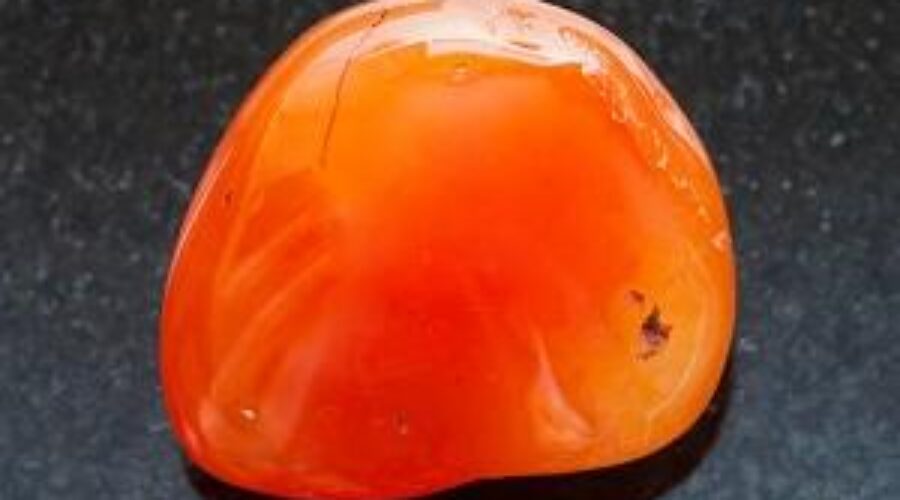
Examining The Properties of Carnelian
Carnelian is a member of the quartz family and is derived from the Latin word meaning horn. Carnelian is also spelled ‘cornelian’ and has also been referred to as Mecca Stone, Pigeon’s blood Agate, and Sadoine. Carnelian is a reddish-orange, or reddish-brown colored gemstone. It has a warm, uniform, and easily distinguishable color. A glassy, translucent stone, Carnelian is an orange-colored variety of Chalcedony, a mineral of the Quartz family. Its color varies from pale pinkish-orange to a deep rusty brown, though it is most known for its brilliant orange and red-orange crystals. Its name comes from a Latin word meaning “flesh.”
Carnelian stones are about action, empowerment, physical health and vitality. By activating the first three chakras, Carnelian helps to provide a powerful boost to your willpower, with the physical energy and drive to back it up. If your heart wants something, Carnelian can give you the confidence and power to go for it. Like the unexpected sunset, or the first flash of autumn brilliance, Carnelian captivates. Its bold energy brings a rush of warmth and joy that lingers, stimulating and empowering. Known as a stone of motivation and endurance, leadership, and courage, Carnelians have protected and inspired throughout history.
-

Chakra Healing Crystals Healing Crystal Set 26 Pcs for Meditation, Reiki, and Chakra Balancing with Wooden Box
$25.99 -

Chakra Healing Crystals Chakra Crystal Tree 7 Stones for Healing, Feng Shui, Meditation, and Home Decor
$18.95 -

Chakra Healing Crystals 1 LB Red Jasper Tumbled Stones Bulk Polished Healing Crystals
$19.93 -
Sale!

Chakra Healing Crystals 7 Chakra Healing Crystals Set with Large Raw Stones and Wooden Gift Box
Original price was: $29.99.$23.99Current price is: $23.99. -

Chakra Healing Crystals Red Jasper Crystal Tree of Life with Chakra Healing Pendant Necklaces
$23.99 -

Chakra Healing Crystals 10 Piece Red Jasper Healing Crystal Wand Set with Polished Hexagonal Points
$11.99 -
Sale!

Stones Collection 72 Piece Polished Healing Crystal Stone Set with Multicolor Tumbled Stones
Original price was: $16.99.$13.99Current price is: $13.99. -
Sale!

Stones Collection 300+ Piece Rocks and Minerals Collection for Kids with Real Gemstones and Geodes
Original price was: $26.99.$22.00Current price is: $22.00.
In antiquity, as well as today, Carnelian is believed to help timid speakers become both eloquent and bold. Ancient Warriors wore Carnelian around their neck for courage and physical power to conquer their enemies. In Egypt, it was worn by master architects to show their rank of builder, and alchemists of the Middle Ages used it as a boiling stone to activate the energy of other Chalcedonies. As the first stone in the breastplate of the High Priest, it signified the blood of the martyrs and was once believed to prevent illness and the Plague. Carnelian is traditionally worn to enhance passion, love, and desire.
The best quality carnelian is found in India but it is also found in many other parts of the world including Uruguay, Brazil, Japan, Botswana, and Madagascar. In the United States, Carnelian can be found in Texas, North Carolina, Colorado, and Florida.

