
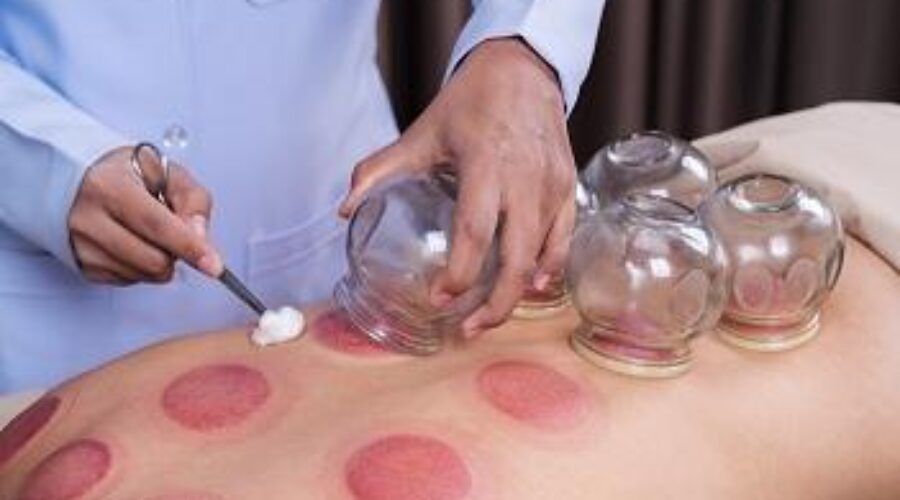
What is Cupping?
Cupping is an ancient form of alternative medicine where the therapist puts special cups on your skin for a few minutes to create suction. People choose this type of treatment for many reasons such as pain management, reduction of inflammation, to achieve better blood flow and for overall relaxation and well being. Cups can be made of glass, bamboo, silicone and earthenware.
It might have become more trendy over the last few years, but it is certainly nothing new. Cupping dates back to Egyptian, Chinese and Middle Eastern cultures. There are two different methods; dry and wet. The therapist puts a flammable substance such as alcohol, herbs or paper in a cop and sets it on fire. As the fire goes out, the practitioner puts the cup upside down on the patient’s skin. As the air inside the cup cools, it creates a vacuum which causes the skin to rise and redden as the blood vessels expand. Cups can be left in place for 3 minutes or more.
In more modern versions of the cups used today, a rubber pump is used instead of fire to create the vacuum. When therapists use silicone cups, they can easily move them to create a massaging effect. Wet cupping creates mild suction for 3 minutes. The therapist then makes tiny cuts on the patient’s skin with a scalpel. Then, they reapply the cups for a second application to draw out a small amount of blood. Wet cupping supporters believe that this method removes harmful substances and toxins from the body to promote healing, but there is no proven evidence on this one way or another. The practitioner then applies an antibiotic and a bandage to avoid infection. The skin returns to normal in approximately 10 days.
Side effects of cupping could include mild discomfort, burns, bruises and skin infection. It is always helpful to ask your practitioner some basic questions before a session such as:
- What conditions do you typically use this therapy for?
- What kind of training have you had?
- What is your experience in using this therapy?
- Are my conditions conducive to receiving this type of therapy or should I avoid it?
- What results have some of your other patients received?
As with any type of holistic treatment, you should always do your research on the topic and the practitioners providing the service. Asking others who have already had the treatments is just another step towards making your own informed decision.

